
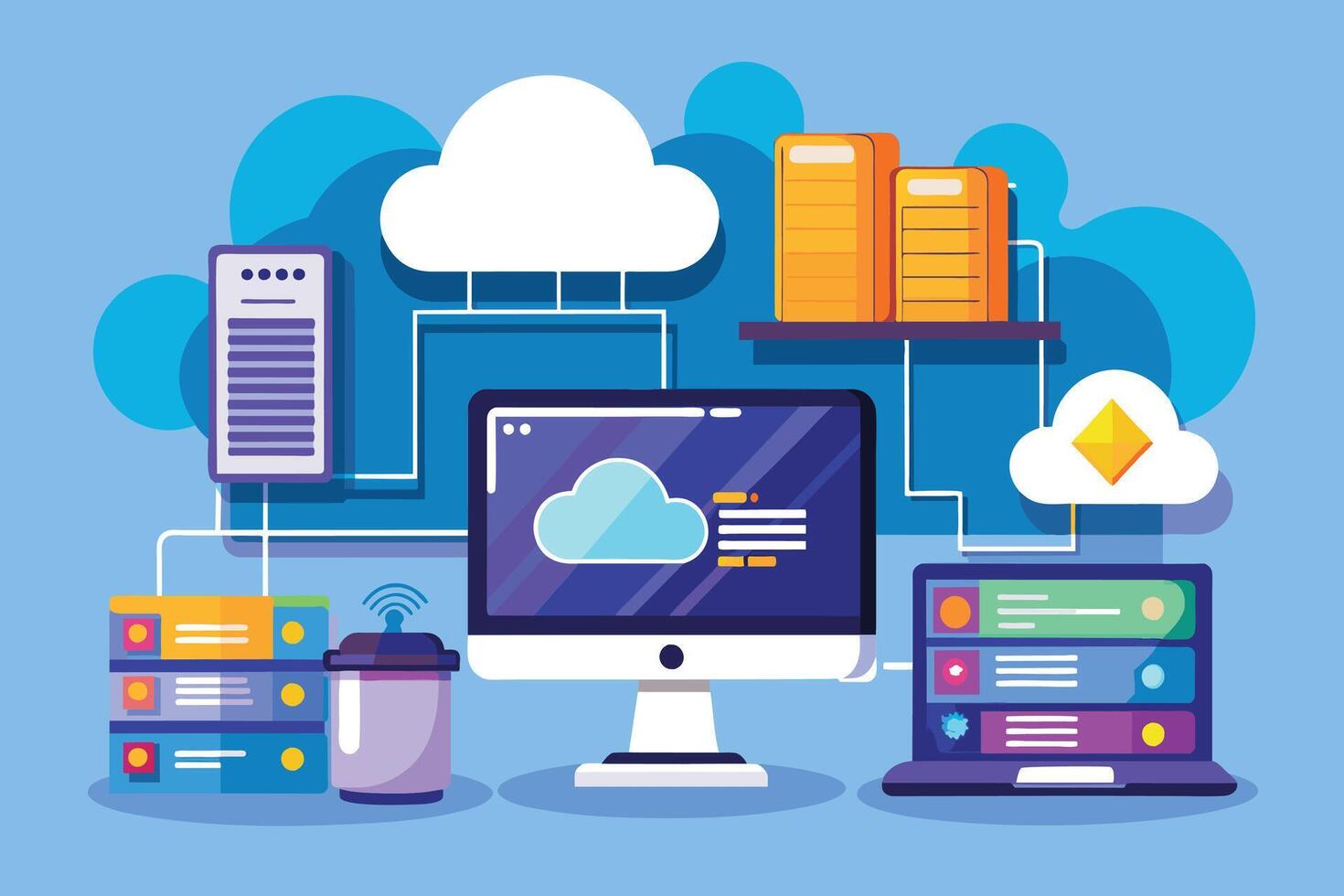
In today’s digital world, every click and every interaction is powered by an invisible system working quietly behind the scenes. At Softdelve Digitals, we believe that when enterprise teams understand the foundations of modern web architecture, they’re better equipped to build faster, smarter, and more impactful digital experiences.
This guide breaks down the core technologies that shape the web—and reveals how they influence the websites, funnels, and digital products we craft for enterprise leaders.
Understanding the Client-Server Model in Modern Web Architecture
Every digital action—whether loading a homepage or completing a checkout—begins with a simple relationship: a request made by a client and a response delivered by a server. This interaction is the heartbeat of modern web architecture.
The Client
The client is the user’s device—your browser, mobile app, or tablet.
It manages the interface, handles user interactions, and displays the final output.
In simple terms, it asks the questions.
The Server
The server is the powerhouse.
It stores data, processes logic, runs applications, and sends responses back to the client.
This is where the answers live.
The Network
The network is the connection point between both ends.
Whether it’s WiFi, mobile data, or a local network, it carries requests and delivers responses in milliseconds.
The Protocols
Protocols like HTTP, TCP/IP, and FTP set the rules for how communication should happen.
They keep the flow clean, structured, and predictable—crucial pillars of modern web architecture.
How the Interaction Flows
When a user types a URL or clicks a link:
- The client sends an HTTP request.
- The server processes it and prepares a response.
- It returns HTML, CSS, JavaScript, images, and data.
- The browser renders everything into a seamless experience.
This simple yet powerful loop fuels every digital experience Softdelve builds for enterprise clients.
The Internet vs. the Web: Why It Matters in Modern Web Architecture
Many people use the terms interchangeably, but they’re very different pieces of the same ecosystem—a distinction every enterprise leader should understand.
The Internet
A massive physical infrastructure of cables, routers, satellites, and servers.
It powers countless services like email, cloud software, and messaging.
The World Wide Web
A service built on top of the Internet.
It includes the pages, applications, and multimedia experiences we access through a browser.
The Role of HTTP
HTTP is the translator between browsers and servers.
It defines how information is requested and delivered, forming the core communication layer of modern web architecture.
Softdelve leverages this protocol every time we optimize load speed, streamline user flows, or elevate enterprise conversion journeys.
How HTML, CSS, and JavaScript Power Modern Web Architecture
Every modern digital experience is built on three essential technologies—working together to create structure, style, and interactivity.
HTML – Structure
HTML creates the foundation: headers, paragraphs, images, forms, and page layout.
It ensures your content has meaning and clarity for both users and search engines.
CSS – Design
CSS adds visual expression: typography, spacing, layouts, color systems, and animations.
This is where Softdelve shapes brand identity into elegant, modern digital design.
JavaScript – Interactivity
JavaScript brings the page to life—validating forms, powering animations, supporting navigation, and performing real-time updates.
This dynamic layer is essential to creating responsive, human-centered experiences that define modern web architecture.
The Evolution of the Web and Its Impact on Modern Web Architecture
The web has evolved dramatically, shaping how brands and users interact online.
Web 1.0 – Read-Only
Static pages with limited interaction.
Information flowed in one direction.
Web 2.0 – Read-Write
Social platforms emerged.
Users became both consumers and creators.
Interactivity became the norm.
Web 3.0 – Intelligent and Decentralized
AI, blockchain, and machine learning introduced personalization, data ownership, and smarter experiences.
Enterprise brands now rely on modern web architecture to handle these new levels of complexity, intelligence, and scale.
The Role of the DOM in Scalable Modern Web Architecture
The Document Object Model (DOM) represents a web page as a dynamic tree of elements.
JavaScript uses the DOM to rearrange content, respond to interactions, animate elements, and adapt the page without reloading.
This live, interactive structure is central to building the scalable, conversion-focused experiences Softdelve delivers for enterprise brands.
Why Code Validation Tools Matter in High-Performance Modern Web Architecture
At Softdelve, we treat clean, validated code as a mark of craftsmanship.
Tools like the W3C Markup Validation Service ensure your website or product meets global web standards.
Benefits of Validation Tools
- Stable performance across all browsers
- Better accessibility for users with assistive devices
- Stronger SEO due to clean, structured markup
- Faster debugging and easier maintenance
- Long-term code quality and reliability
How W3C Validation Works
The validator checks your HTML for errors or structural issues, then provides a detailed report to help refine your code.
This commitment to precision is one of the reasons enterprise brands trust Softdelve with mission-critical digital products.
Final Thoughts: Building the Future Through Modern Web Architecture
Understanding modern web architecture helps brands build experiences that are faster, smarter, and more human. At Softdelve Digitals, we pair this technical foundation with human-centered design to craft websites, funnels, and digital systems that scale with ambition.
Whether you’re developing a new platform, optimizing a customer journey, or architecting a full enterprise ecosystem—Softdelve is here to help you build it with clarity and impact.
Let’s create digital experiences that move people and elevate brands.
Let’s shape the future—together.